
Standardized vs. Ratio Extracts: What to Look for in a COA
Botanical extracts sold under the same plant name may differ in composition and quality, even when their prices are similar. These differences can affect their suitability for capsules, beverages and cosmetic formulations. When evaluating an extract, buyers should first establish whether it is standardized to a specific marker compound or supplied at a stated extraction ratio, and check how this information is documented in the Certificate of Analysis (COA).
The two product types answer different questions
A standardized extract is defined by an assay figure for a named compound. A ratio extract is defined by how much raw plant went into how much finished powder. Neither is better. They suit different formulation strategies, and the specification has to match the one that was intended.
Botanical Cube has built its catalog around that split over more than twenty years, with dozens of active monomer compounds, close to 100 standardized plant extracts and over 200 ratio based botanical extracts in the range.
Key Information to Check in a Certificate of Analysis
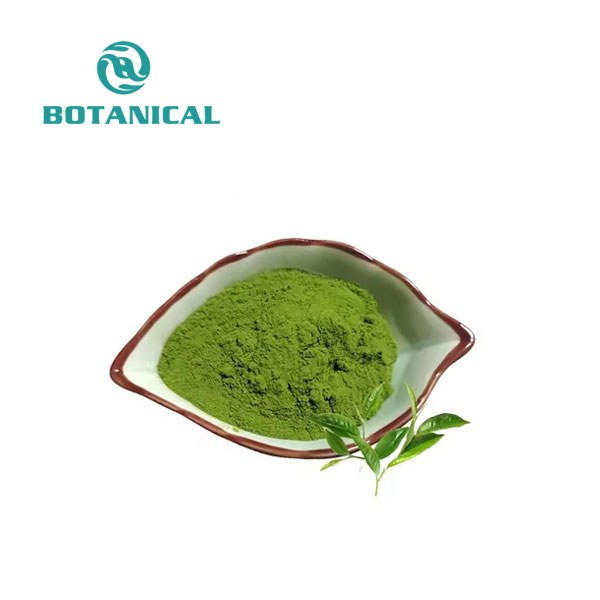
A Certificate of Analysis (COA) should provide both the required specifications and the actual test results for a product. An organic matcha powder COA, for example, may include sensory characteristics, particle size, assay, moisture, ash content and safety-related test results.
In the referenced specification, 95% of the powder passes through an 80-mesh sieve. The assay requirement is at least 99.0%, with a reported result of 99.94%. Moisture and ash are each limited to 5.0%, while the measured values are 1.46% and 2.97%, respectively.
Microbiological and heavy metal limits are documented separately. The aerobic bacterial count is limited to 1,000 CFU/g under GB 4789.2, and the yeast count to 100 CFU/g under GB 4789.15. The specification also sets a total heavy metal limit of less than 10 ppm.
Alongside these figures, the COA should identify the test methods used. This allows buyers and quality control teams to review the results against the agreed specifications and assess whether the material meets their requirements.
How Product Grades Affect Botanical Extract Selection
The ube purple yam powder listing makes grade concrete. Regular, Low Pesticide Residue and Organic versions are each specified at 80 mesh pass, with moisture recorded at 7.4, 7.8 and 7.7 percent respectively. Minimum order quantity then changes with both grade and pack format, from a 100 g stand up pouch through 300 g and 500 g pouches to 50 g and 100 g tins.
Reading grade, mesh and moisture together tells a buyer what the material will do in a blend. Reading the grade name alone does not. Particle size is specified the same way across all three grades, at 80 mesh pass, so the grade changes the residue limits and the certification, not the grind.
Manufacturing Facilities and Production Capacity
The company operates three GMP-compliant manufacturing facilities in Huyi District, Xi’an; Sanyuan County, Xianyang; and Shanyang County, Shangluo. Together, these sites cover more than 200 acres and support the production of botanical extracts.
The manufacturing operations are supported by three independent research and development centers with capabilities in extraction, purification and analytical testing. This combination of production and technical resources supports product development, quality control and ongoing supply requirements.
Quality Testing and Third-Party Verification
In addition to its internal quality control procedures, the company works with independent testing organizations, including SGS, Eurofins, Pony and Mérieux, to assess product quality and compliance with applicable standards.
Testing may be conducted with reference to the Chinese Pharmacopoeia (CP), European Pharmacopoeia (EP) and United States Pharmacopeia (USP), depending on the material and market requirements. These assessments provide additional documentation for buyers reviewing product specifications and quality consistency.
The company also supplies botanical ingredients to international markets, with a distribution network reported to reach more than 60% of countries worldwide.
Conclusion
When sourcing botanical extracts, buyers should distinguish between standardized extracts and ratio extracts and review the supporting quality documentation. A Certificate of Analysis should identify the relevant specifications, actual test results and testing methods, particularly for assay, moisture, ash content, heavy metals and microbiological parameters.
Reviewing these details alongside manufacturing capabilities and quality control procedures can help buyers assess material suitability and consistency before placing an order.
